

UK : The 7 most shocking testimonies from workers at Sports Direct
Sports Direct, the British retailing group, has been compared to a “Victorian workhouse” by MPs as they condemned the firm for its appalling work practices.
The Business, Innovation and Skills
committee said the retailer was treating workers as “commodities” rather than human beings in 37-page report.
It followed an inquiry into Sports Direct’s treatment of its staff at its shops and warehouses.
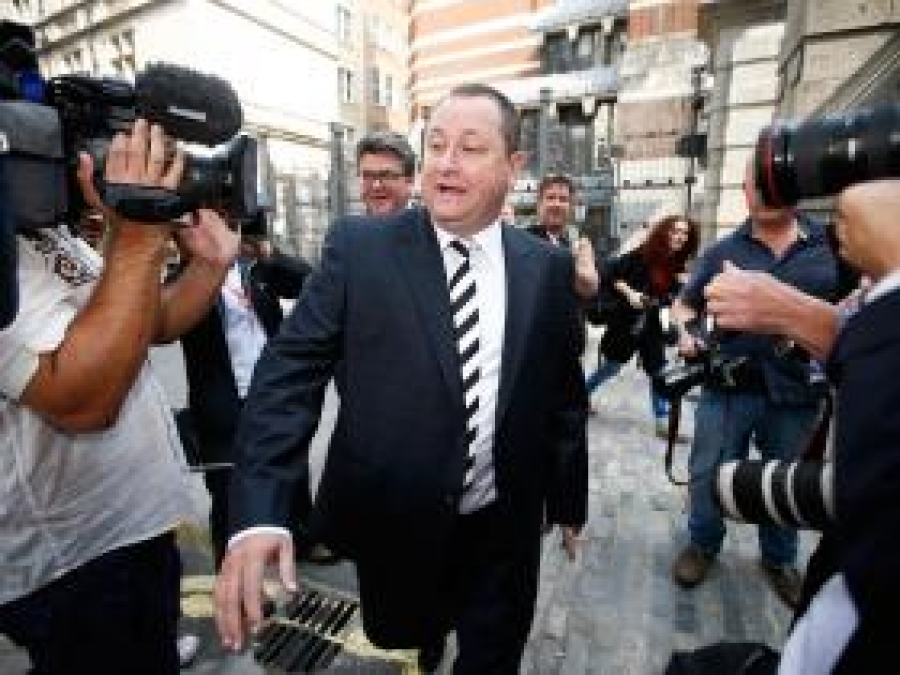
Mike Ashley, the founder of Sports Direct, gave evidence last month, despite initially refusing to appear in front of MPs.
He claimed that he was unaware of these practices but admitted his company has broken the law by falling to pay the national minimum wage to his employees.
Ian Wright MP, chair of the Business, Innovation and Skills Committee, said Ashley should be held accountable for his failings.
“Whistleblowers, parts of the media and a trade union shone a light on work practices at Sports Direct and what they revealed was extremely disturbing.
Read more
- Sports Direct founder Mike Ashley accountable for ‘appalling’ work conditions, says damning report
- Sports Direct cuts staff bonus after profits fall 15%
- Want to know what Brexit might look like? Look to Sports Direct
- Sports Direct docked 15 minutes of workers' pay for turning up one minute late- but the DWP is worse
“The evidence we heard points to a business whose working practices are closer to that of a Victorian workhouse than that of a modern, reputable High Street retailer,” Wright said.
“For this to occur in the UK in 2016 is a serious indictment of the management at Sports Direct and Mike Ashley, as the face of Sports Direct, must be held accountable for these failings,” he added.
Sports Direct is also under investigation by HMRC for paying workers less than the national minimum wage.
The Committee heard a series of accounts of worker mistreatment, including staff being penalised for matters such as taking a short break to drink water and for taking time off work when ill – the ‘six strikes and you’re out’ policy.
Here are the 7 most shocking statements and facts heard by the committee:
1. Fired when off work and ill
“I was off sick for a few weeks because of ill health. I was sending in sick notes from the doctor. The day I was due to start back to work I received an email laying me off, with no explanation, just paid off and a pay statement.”
2. Humiliation
- “Whilst I was there, your pick was timed to the second. If your pick was late you got a strike. But when the aisles are full of other pickers, this is impossible to meet. We still had to suffer humiliation over the Tannoy, with your name called out so that everybody knew.”
Pickers are workers who pick items from the warehouse shelves, which they then place into a metal cage.
- A female member of staff said she was being forced to talk about her periods publicly (she had been off sick, due to period pains, having regularly worked 12-hour days).
3. Broken promises
“When the colliery was closed and the town began to suffer, local people were promised 80 per cent of the jobs, but it came to less than 30 per cent, and the majority of jobs went to Eastern European workers.”
4. Working for free
“I’ve witnessed staff being made to clock out so wages aren’t over budget but they were made to keep working, so they weren’t being paid for all the hours they did. I’ve seen staff kept for an hour after their scheduled finish time to tidy the shop, myself included.”
5. “Brainwashing”
“Working for Sports Direct is a very love/hate relationship. I think you could call it a form of brainwashing. My area manager would send out an email on Monday mornings with a list of total hours worked by each of his store managers the week before. Whoever did the least would get a lecture—not dedicated, not showing commitment etc. This wouldn’t be a one to one lecture, but a full blown rant with everyone else copied into the email to see. If you weren’t doing at least 55 hours a week then you weren’t doing enough.”
Biggest business scandals in pictures
Biggest business scandals in pictures
-
1/15 Christine Lagarde faces court over £340m Bernard Tapie payment - July 2016
The head of the International Monetary Fund (IMF), Christine Lagarde, must stand trial in France over a payment of €403 million (now £340m, then £290m) to tycoon Bernard Tapie, a France's highest appeals court has ruled. The court rejected Ms Lagarde's appeal against a judge's order in December for her to stand trial over allegations of negligence in her handling of the affair. Ms Lagarde could risk a maximum penalty of one year in prison and a fine of €15,000 euros if convicted.
Reuters
-
2/15 HSBC senior manager arrested in FX rigging investigation at JFK airport in New York - July 2016
A senior executive at HSBC has been arrested at New York's JFK airport for his alleged involvement in a conspiracy to rig currency benchmarks, according to reports. Mark Johnson, global head of foreign exchange cash trading in London, was reportedly arrested on Tuesday. He will appear before a federal court in Brooklyn on Wednesday charged with conspiracy to commit wire fraud, Bloomberg said.
Getty
-
3/15 Former PwC employees found guilty in 'Luxleaks' tax scandal - June 2016
Two ex- PricewaterhouseCoopers staffers were found guilty in Luxembourg of stealing confidential tax files that helped unleash a global scandal over generous fiscal deals for hundreds of international companies. Antoine Deltour and Raphael Halet face suspended sentences of 12 months and 9 months and were ordered to pay fines of €1,500 (£1,230) and €1,000 (£822) for their role in the so-called LuxLeaks scandal. Despite the minimal sentences, the ruling was described by Deltour’s lawyer as “shocking” and “a terrible anomaly.” The ruling “puts on guard future whistle-blowers,” Deltour told reporters.The LuxLeaks revelations sped beyond Luxembourg, causing European Union regulators to expand a tax-subsidy probe and propose new laws to fight corporate tax dodging, while EU lawmakers created a special committee to probe fiscal deals across the 28-nation bloc.
reuters
-
4/15 Goldman Sachs dealmakers lavished Libyan officials with prostitutes to win contract - June 2016
A former Goldman Sachs dealmaker trying to persuade Gadaffi-era Libya to invest $1 billion with the investment bank procured prostitutes and invited Libyan officials to lavish parties in the hope of winning the business, the High Court heard on Monday June 13.The Libyan Investment Authority sovereign wealth fund is suing Goldman Sachs for inappropriately coercing its naïve staff into giving its sovereign wealth fund cash to the bank to invest in products they did not understand. The products were designed to generate big profits for Goldman, the LIA claims.Goldman denies wrongdoing and says the LIA was treated as an arms-length customer
Reuters
-
5/15 Former boss of BHS said his life was threatened - June 2016
Darren Topp, the former boss of BHS, has said former owner Dominic Chappell threatened to kill him when he challenged him over a £1.5 million transfer out of the business. MPs on the Business, Innovation and Skills Committee asked Mr Topp about a £1.5 million transfer Mr Chappell made from BHS to a company called BHS Sweden.
-
6/15 Sports Direct founder Mike Ashley admits paying workers below the minimum wage - June 2016
Mike Ashley admitted paying Sports Direct employees below the minimum wage at a hearing in front of MPs. The company founder said that workers were paid less than the statutory minimum because of bottlenecks at security in an admission that could result in sanctions from HMRC.
Reuters
-
7/15 Mitsubishi admits ‘improper’ fuel tests - April 2016
Mitsubishi has admitted to using false fuel methods dating back to 1991. The scale of the scandal is only just coming to light after it was revealed in April that data was falsified in the testing of four types of cars, including two Nissan cars.
AP
-
8/15 Panama Papers: Millions of leaked documents expose how world’s rich and powerful hid money - April 2016
Millions of confidential documents have been leaked from one of the world’s most secretive law firms, exposing how the rich and powerful have hidden their money. Dictators and other heads of state have been accused of laundering money, avoiding sanctions and evading tax, according to the unprecedented cache of papers that show the inner workings of the law firm Mossack Fonseca, which is based in Panama.
-
9/15 Google's tax avoidance
Google reached a deal with the HM Revenue and Customs to pay back £130 million in so-called “back-taxes” that have been due since 2005. George Osborne championed the deal as a “major success”. But European MEPs have since called for the Chancellor to appear in front of the committee on tax rulings to explain the tax deal.
-
10/15 Turing Pharmaceuticals and Martin Shkreli
Martin Shkreli became known as the “most hated man in the world” after his drug company, Turing, increased the price of a 62-year-old drug that treated HIV patients by 5,000% to $750 a pill. He was charged with illegally taking stock from Retrophin, a biotechnology firm he started in 2011, and using it pay off debts from unrelated business dealings. Shkreli, who maintains he is innocent, and says there is little evidence of fraud because his investors didn't lose money.
-
11/15 Volkswagen emissions scandal
VW admitted to rigging its US emission tests so that diesel-powered cars would looks like they were emitting less nitrous oxide, which can damage the ozone layer and contribute to respiratory diseases. Around 11 million cars worldwide were affected.
-
12/15 Quindell, the scandal-ridden insurance firm
Quindell was once a darling of AIM but its share price fell in April 2014 when its accounting practices were attacked in a stinging research note by US short seller Gotham City. In August the group was forced to disclose that the £107 million pre-tax profit it had reported for 2013 was incorrect, and it had in fact suffered a £64million loss.
-
13/15 Toshiba Accounting Scandal
The boss of Toshiba, the Japanese technology giant, resigned in disgrace in the wake of one of the country’s biggest ever accounting scandals. His exit came two months after the company revealed that it was investigating accounting irregularities. An independent investigatory panel said that Toshiba’s management had inflated its reported profits by up to 152 billion yen (£780m) between 2008 and 2014.
-
14/15 FIFA Corruption Scandal
Fifa, football's world governing body, has been engulfed by claims of widespread corruption since the summer of 2015, when the US Department of Justice indicted several top executives. It has now claimed the careers of two of the most powerful men in football, Fifa President Sepp Blatter and Uefa President Michel Platini, after they were banned for eight years from all football-related activities by Fifa's ethics committee. A Swiss criminal investigation into the pair is ongoing.
Getty Images
-
15/15 Libor fraudster
City trader Tom Hayes, 35, has become the first person to be convicted of rigging Libor rates following a trial at London's Southwark Crown Court. Hayes worked as a trader in yen derivatives at UBS before joining the American bank Citigroup in Tokyo. He was fired from Citigroup following an investigation into his trading methods. He returned to the UK in December 2012 and was arrested following a two-and-a-half year criminal investigation by the SFO.
Getty Images
6. Zero-hours contracts
Staff on zero-hour contracts were being forced to work a further three hours without pay. If they refused, they would not be offered any hours the following day.
7. Health and safety issues
A total of 110 ambulances or paramedic cars were dispatched to the Shirebrook warehouse’s postcode between 1 January 2013 and 19 April 2016 with 50 cases classified as “life-threatening”, including chest pain, breathing problems, convulsions, fitting and strokes, and five calls from women suffering pregnancy difficulties, including one woman who gave birth in the toilet in the warehouse.
Jeremy Corbyn wants to combat workplace discrimination
There were 115 incidents from 1 January 2010 to 19 April 2016, including an amputation of a finger, a fractured neck, a crushed hand, and hand, wrist, back and head injuries.
Twelve of the incidents were listed as “major” injuries, with 79 injuries leading to absences from work of over seven days
 Reuse content